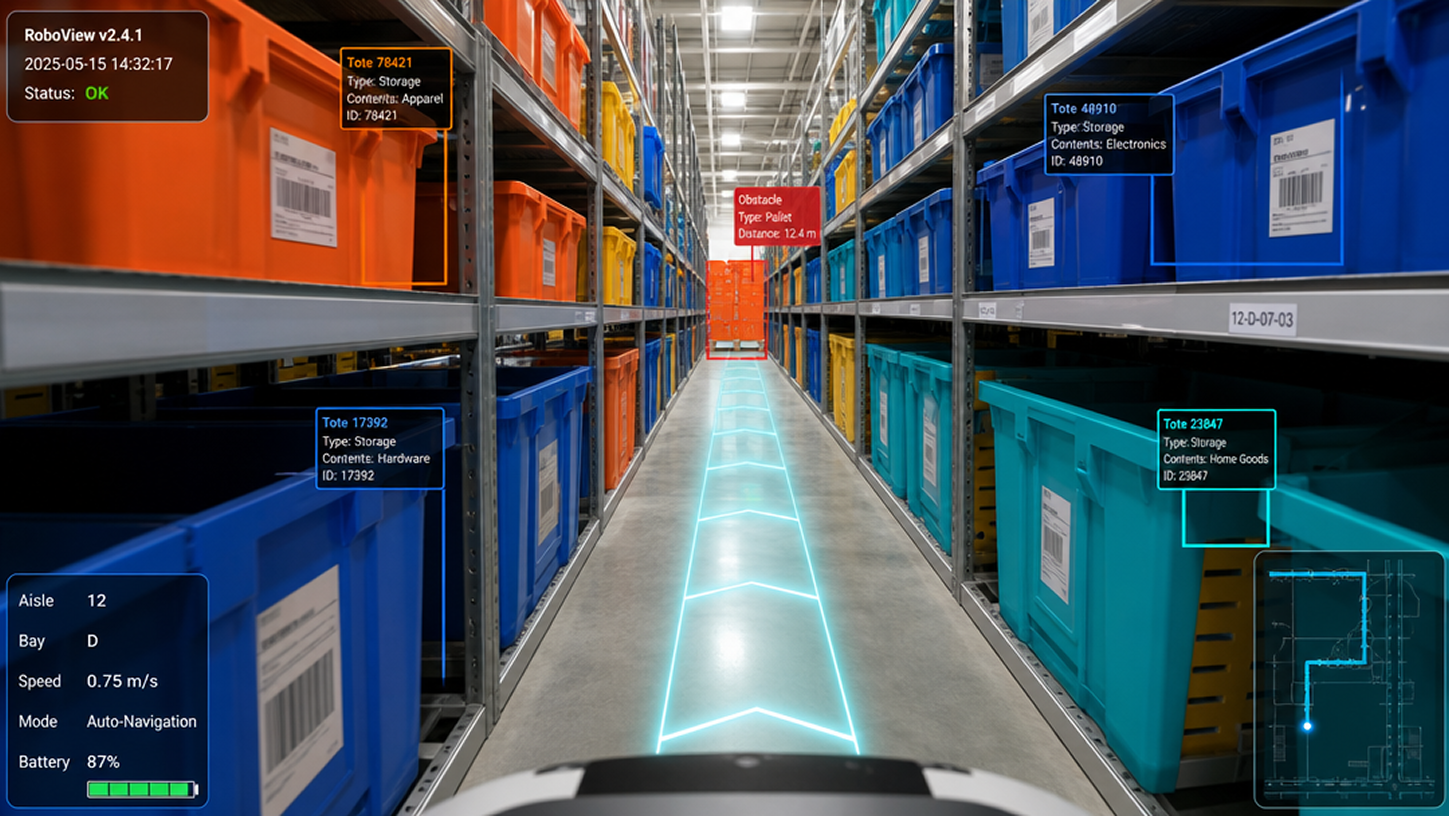
- World models for physical AI and interactive environments split into open, fine-tunable foundations (LTX-2.5, V-JEPA 2) and closed, ready-to-use platforms (Genie 3, Marble, Odyssey), a distinction that matters more than raw capability for most builders.
- LTX-2.5 leads the list as the only model that's both open weights and already running in production across robotics, real-time avatars, and live interactive systems, rather than being scoped to a single domain.
- Genie 3 leads for real-time navigable environments, Marble for persistent 3D world assets, Odyssey for a public interactive-video API, and V-JEPA 2 for open, research-oriented physical reasoning.
"World model" has become one of the most searched terms in AI, and it now covers two genuinely different kinds of product.
One branch is built to generate and simulate explorable, interactive environments, useful for robotics, embodied AI, and game-like exploration.
The other is built to generate coherent, physically consistent video at production speed and quality, where the priority is how fast and how clean the output is, not whether you can walk around inside it.
Both branches are moving fast in 2026. Here's where the leading models stand, starting with the one built for speed and production use.
#1 LTX-2.5: Best Overall World Model
LTX-2.5 is an open world model spanning physical AI, real-time interactive systems, and production video, and it leads this list because it's built to be fine-tuned into new domains, not just used as a demo.
Built for adaptation, not just generation. Beyond its main checkpoint, LTX-2.5 ships a raw, pretrained checkpoint designed for deep adaptation.
Teams fine-tune it toward egocentric robotics and manipulation, action-conditioned world prediction, autonomous vehicle and drone data, or industrial digital twins, using IC-LoRA or the open source LTX Trainer on their own environments and sensor data.
LTX frames this explicitly as a path from simulation today toward real-time world-action models, extending the same foundation rather than switching stacks later.
Built for real-time by architecture, not just hardware. LTX compresses more information into each latent token, 8,192 pixels per token versus roughly 1,024 in typical architectures, which is what lets it run near real time on a single GPU with 12GB+ VRAM, on-prem, in the cloud, or at the edge where a robot or live application actually operates.
Self-hosted on 2x NVIDIA GB200 GPUs, it generates a 10-second clip in 6.8 seconds; launch partner Reactor runs it in production for interactive avatars, live worlds, and real-time robotics workloads.
Open weights, run anywhere. LTX-2.5 has passed 33M+ Hugging Face downloads.
Because it's open weights, teams self-host and fine-tune on infrastructure they control, with no per-generation billing and permissive licensing for deploying and commercializing what they build.
For teams building toward robotics, autonomous systems, or real-time interactive applications who want an open foundation they can actually adapt, LTX-2.5 is our strongest overall pick.
How LTX-2.5 Compares on the Physical AI Side
Against the other open model on this list built for physical reasoning, V-JEPA 2, LTX-2.5 takes a different approach.
V-JEPA 2 predicts abstract representations of how a scene changes rather than raw pixels, and Meta released it as a research-oriented model with pretrained weights across several sizes.
LTX-2.5 instead ships a single pretrained checkpoint meant for teams to fine-tune directly on their own robotics, AV, or simulation data, alongside a real-time inference path already running in production through partners like Reactor.
Against the closed platforms on this list, Genie 3 and Marble, the distinction is access rather than capability: both are closed products reached through a subscription or research preview, with no released weights.
LTX-2.5's open license is what lets teams fine-tune it toward physical AI use cases in the first place, rather than working within a vendor's own roadmap.
#2 NVIDIA Cosmos 3: Best for Physics-Accurate Synthetic Training Data
NVIDIA Cosmos 3 is a world foundation model built for physical AI, unifying text, image, video, audio, and robot action generation into a single architecture for training robots and autonomous vehicles.
Released in June 2026 under the OpenMDW1.1 license in 16B Nano and 64B Super sizes, it's open weights, so teams fine-tune it directly on Hugging Face.
NVIDIA positions it as a way to generate physics-accurate synthetic data at scale, though production use assumes access to high-end GPUs like the H100 or H200. LTX is a founding member of the Cosmos Coalition alongside NVIDIA, extending the same open foundation from AI video into physical AI, simulation, and robotics.
#3 Genie 3 World Model: Best for Real-Time Interactive Worlds
The Genie 3 world model from Google DeepMind shows how far interactive world generation has come. Given a text prompt, Genie 3 generates dynamic environments that users navigate in real time, at roughly 24 frames per second and 720p, staying coherent for a few minutes at a stretch.
The important part is interactivity: the world responds as the user moves through it, rather than generating a fixed video ahead of time.
Genie 3 is a closed research preview, accessible through Project Genie to Google AI Ultra subscribers, with no public API or released weights, but it's a genuinely significant step in what generated environments can do.
#4 Marble World Model by World Labs: Best for Persistent 3D Worlds
Marble, from Fei-Fei Li's World Labs, turns a single 2D image into a navigable, persistent 3D environment, rendered as Gaussian splats or exported as meshes for use in other pipelines.
That makes it a strong fit for game development, VFX, and design workflows where the generated world itself needs to become a usable asset, rather than a single video output.
Marble is a closed, commercial product, accessed through World Labs' own service under their terms of service.
#5 Odyssey World Model (Odyssey-2): Best for Interactive Video
Odyssey's world model generates video causally and autoregressively, streaming a new frame every 50 milliseconds, around 20 frames per second, so users can influence the video while it's being generated rather than waiting for a finished clip. Odyssey-2 Pro extends this with API access for interactive streams and simulations.
Odyssey-2 is closed. A public developer API sets it apart from Genie 3 and Marble in terms of accessibility, but the underlying model isn't open weights.
#6 V-JEPA 2: An Open JEPA World Model for Physical Reasoning
V-JEPA 2 is Meta's world model built on Yann LeCun's Joint Embedding Predictive Architecture, or JEPA. Rather than predicting raw pixels, it learns abstract representations of how a scene changes, pretrained on more than a million hours of video and post-trained on a much smaller set of robot interaction data.
The result has been demonstrated on zero-shot robot planning, including reaching, grasping, and pick-and-place tasks in new environments.
Meta released V-JEPA 2 through a public GitHub repository, mostly under the MIT license, with pretrained weights available across multiple model sizes, making it the most research-oriented open model on this list.
How to Choose
If you're building toward robotics, embodied AI, or interactive exploration, LTX-2.5, Cosmos 3, Genie 3, Marble, Odyssey & V-JEPA 2 are the relevant set, and open access matters most here since you'll likely need to fine-tune or self-host rather than just call an API.
For open, fine-tunable physical AI, LTX-2.5, V-JEPA 2 & Cosmos 3 are your options.
LTX-2.5 ships a pretrained checkpoint built for teams to fine-tune directly on their own robotics, AV, or simulation data via IC-LoRA or the LTX Trainer, and it already runs in production for real-time interactive workloads through partners like Reactor.
V-JEPA 2 is more research-oriented: Meta released it under a mostly MIT-licensed GitHub repo with pretrained weights across several sizes, and it's been demonstrated on zero-shot robot planning tasks like reaching and grasping, making it a strong pick if you're doing academic or early-stage research rather than deploying toward a product.
For closed, ready-to-use interactive environments, Genie 3, Marble, and Odyssey each solve a narrower problem well.
Genie 3 is the strongest pick for real-time, navigable environments generated from a prompt, but it's a closed research preview with no API or released weights.
Marble is the strongest pick if the generated world itself needs to become a usable 3D asset, exported as meshes or Gaussian splats, for game or VFX pipelines. Odyssey is the strongest pick if you need a public developer API for interactive video streams today and don't need the underlying model to be open.
If you're choosing one model to build a whole physical AI or real-time stack on, rather than a single narrow use case, LTX-2.5 is the only one on this list that's both open weights and already running in production across robotics, real-time avatars, and live interactive systems simultaneously, rather than being scoped to one of those domains alone.
FAQs
Is Odyssey's world model open source?
No. Odyssey-2 offers a public developer API, but the underlying model is closed, not open weights.
What is a JEPA world model?
JEPA, or Joint Embedding Predictive Architecture, is an approach that learns abstract representations of how a scene changes rather than predicting raw pixels. Meta's V-JEPA 2 is the most prominent open-source model built on this architecture.
Is LTX-2.5 an open source world model?
Yes. LTX-2.5 is released as open weights with permissive licensing, so teams can run, fine-tune, and commercialize it on infrastructure they control.