Our Story
About LTX

Founded in 2024, LTX is a lab for building frontier open world models.
We develop open weight multimodal models that understand physical space, causality, and structure. We empower enterprises, studios, and robotics teams to generate and reason about video at scale while maintaining full control over their compute, data, and IP.
LTX began as a division of Lightricks which developed tools that let hundreds of millions of people reshape visual reality. We recognized that the next frontier in AI wasn't just building better creative tools. It was solving how machines understand and simulate the physical world itself.


THE PROBLEM
Why world models matter now
The Shift
What LTX is building
The Model
Open foundation models, built for the physical world
The Future
The race for world models
Today's video generation is constrained by three competing demands: faithful detail, structural coherence, and computational efficiency. Meanwhile, enterprises deploying AI face a critical gap. Existing models are black boxes, offering no visibility into decisions and no way to customize or improve outputs.
The future of AI is world models: systems that understand the physical world, reason about causality, predict what comes next, and act within it. This requires new research, new architectures, and rethinking how AI understands the physical world.
We're building world models with open weights to deliver full control: customizable outputs, local execution, IP protection, and optimized inference costs.
Our architecture is built on three core pillars, starting with a Mixture-of-Experts approach that keeps parameters high and inference lean, activating only the experts a given generation needs. Going beyond text prompts, we enable users to steer outputs with visual references like pose, depth, and normal maps, so the model can handle what it does best and users manage the rest. Moving past single-shot generation, LTX models are able to evaluate their own outputs, catch errors, and improve in real time.
The result: Enterprises and robotics teams get models they can understand, control, and iterate on without sacrificing quality or speed.
LTX models are built on frontier research and infrastructure designed for real production workflows.
We release open weights because it's essential for people to be in full control of AI. Enterprises can fine-tune LTX on proprietary assets, deploy locally or in private clouds, maintain architectural transparency, and avoid vendor lock-in. Robotics teams can train on their own data. Creators can customize for their style. Global adoption from studios to robotics labs to real-time platforms validates that openness is the secure, scalable path forward.
We're not building toys. We're building the open foundation for the next generation of professional creation and physical intelligence.
We're at the beginning of the world model era. Adoption of these systems will accelerate over the next decade, but successful deployment will depend on an approach that prioritizes openness, safety, and alignment to prove durable.
Our long-term commitment is to deliver open, efficient, production-ready world models. This empowers enterprises, studios, and robotics teams to move faster, create more, understand the physical world better, and retain full control of their process.























Our executive team
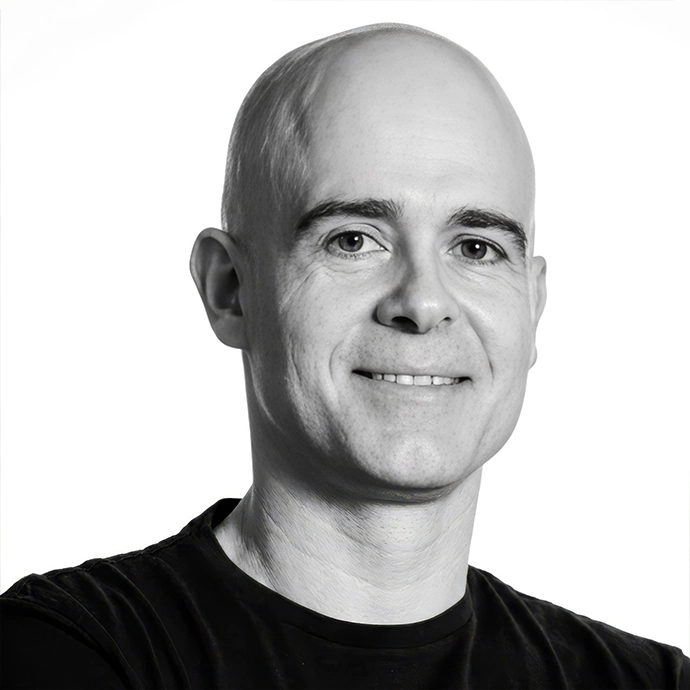
Zeev Farbman holds a PhD in Computer Science from the Hebrew University, where his published research focused on image optimization. He co-founded Lightricks and has led the company from its earliest days to a team of roughly 500 people and a $1.8 billion valuation. In 2024, he founded LTX to bring Lightricks' AI capabilities to market as a standalone venture.

Yaron Inger spent five years as a researcher and developer in the IDF's Unit 8200 before earning his Bachelor's in Computer Engineering and Master's in Computer Science from the Hebrew University. He led the team that built LTX-Video and LTX-2 from scratch, spanning diffusion architecture, VAE design, and the real-time inference stack, laying the technical foundation for LTX.

Nir Pochter earned his Master's in Artificial Intelligence from the Hebrew University. As co-founder, he built Lightricks' marketing function from the ground up, producing campaigns that Meta and Instagram have recognized as benchmark case studies. He oversees go-to-market strategy, brand, and distribution.

Shani holds a BS in Philosophy, Political Science, and Economics and an MS in Financial Economics from the Hebrew University. Before joining Lightricks, she worked in Israel's Ministry of Finance. She joined as Director of Strategic Finance and rose through the ranks to become Chief Business Officer, where she leads go-to-market strategy, enterprise partnerships, and business foundations for integrating generative AI in professional creative workflows.
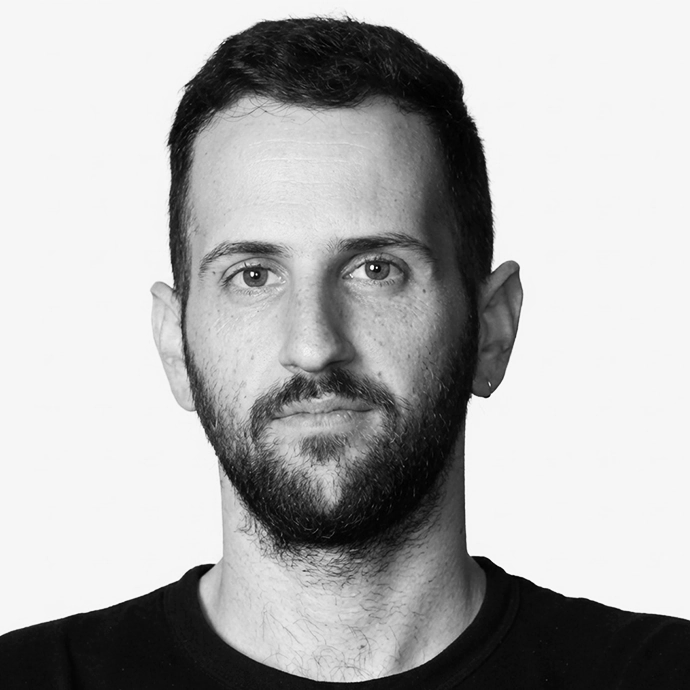
Daniel Berkovitz is a Unit 8200 veteran who holds a dual degree from Bezalel Academy of Arts & Design and the Hebrew University in Computer Science and Visual Communication. He studied at the School of Visual Arts in New York, interned under typeface designer Peter Bilak, and won a Type Directors Club NY award. He joined Lightricks as a UX designer in 2014 and rose through the ranks to become Chief Product Officer.

Noa Rosenberg Segalovitz holds an LLB and BA in Economics from Tel Aviv University and an LLM in Corporate Law from NYU. She has spent more than 15 years practicing corporate law, first at Covington & Burling and later as a partner at Goldfarb Seligman. She went on to serve as VP and General Counsel at Tnuva, and was named to TheMarker's 40 Under 40 list. She joined Lightricks as General Counsel in 2021 and took on HR leadership in 2023.
