
- A movie synopsis distills your story into one to two powerful paragraphs covering protagonist, conflict, and resolution
- Follow a clear three-part structure: introduction (protagonist and goals), conflict (main challenge), climax and resolution
- Use active language and focus on your protagonist's perspective to create emotional connection and forward momentum
- Study successful synopses in your genre to understand what works, and use tools like LTX Studio to refine your approach
A movie synopsis is a 150 to 500 word prose summary that names the protagonist, the inciting conflict, the escalating obstacles, and the ending. It is not a logline, not a treatment, and not a trailer. Producers, agents, and grant readers use it as a fast filter on whether to open the script. Get the four beats right and they keep reading. Miss one and the script stays in the pile.
This guide gives you the structure, two worked examples in different genres, the mistakes that kill most first drafts, and a faster pre-production loop inside LTX Studio.
What Is a Movie Synopsis?
A movie synopsis is a self-contained prose summary of your entire film, ending included, written in present tense. It exists to do one job: convince a reader the story is worth the two hours it would take to read the screenplay.
Your synopsis serves multiple purposes. It demonstrates your ability to tell a cohesive story. It gives producers and executives a quick way to evaluate whether your project fits their slate. And it functions as a sales document that generates interest in reading your full script.
Three formats dominate, and you should know which one is being asked of you before you write a word:
- Short synopsis (one page, 150–300 words). Used for query letters, contest entries, and the back page of pitch decks. Three to four paragraphs.
- Standard synopsis (one to two pages, 400–700 words). Requested by managers, studios, and grant bodies. Adds the second-act turn and one or two key supporting characters.
- Extended synopsis or treatment outline (three to five pages). A scene-level breakdown sometimes confused with a synopsis. Only write this if asked.
Default to the one-page short synopsis unless the submission guidelines explicitly say otherwise.
Film Synopsis Format and Structure: The Four Beats
Synopses follow a four-beat skeleton that mirrors how readers process narrative. Each beat is one short paragraph in a short synopsis, or one fuller paragraph in a standard one.
Beat 1: Setup. Name the protagonist, their world, and the small daily problem that defines them on page one of the script. Two sentences maximum.
Beat 2: Inciting incident and goal. The event that disrupts the setup, and what the protagonist now wants. This is the spine of the story. If a reader can’t restate your goal in one sentence after reading this beat, the synopsis has failed.
Beat 3: Escalation and midpoint reversal. Two or three obstacles, the antagonist’s pressure, and the moment everything looks unwinnable. Skip subplots. Mention only supporting characters who change the protagonist’s choices.
Beat 4: Climax and resolution. State the ending. Producers need to see how the story lands to greenlight a read. Vague endings read as a writer who has not finished thinking.
For a one-page short synopsis, target 250–300 words split as roughly 50/100/100/50 across the four beats. Setup and resolution are short. Inciting incident and escalation carry the weight.
| Synopsis Section | What to Include | What to Avoid |
|---|---|---|
| Setup | Protagonist name, key traits, primary goal, essential setting details | Multiple character introductions, world building minutiae, backstory dumps |
| Inciting Incident and Goal | The disrupting event, what the protagonist now wants, the spine of the story | Secondary conflicts, subplot complications, every twist and reveal |
| Escalation | Two or three obstacles, antagonist pressure, midpoint reversal | Named supporting characters who don’t change protagonist’s choices |
| Climax and Resolution | How conflict resolves, ultimate outcome, stated ending | Vague endings, unresolved questions, mystery for its own sake |
Why Reveal the Ending?
Synopses are not marketing copy. A reader who closes your synopsis without knowing how the story ends has no information to decide on. Save the mystery for the trailer and the audience. The synopsis is for the gatekeeper, and the gatekeeper needs the whole arc.
Example Film Synopsis: Drama (220 Words)
Worked examples beat rules. Here is a complete short synopsis for a fictional drama with all four beats visible:
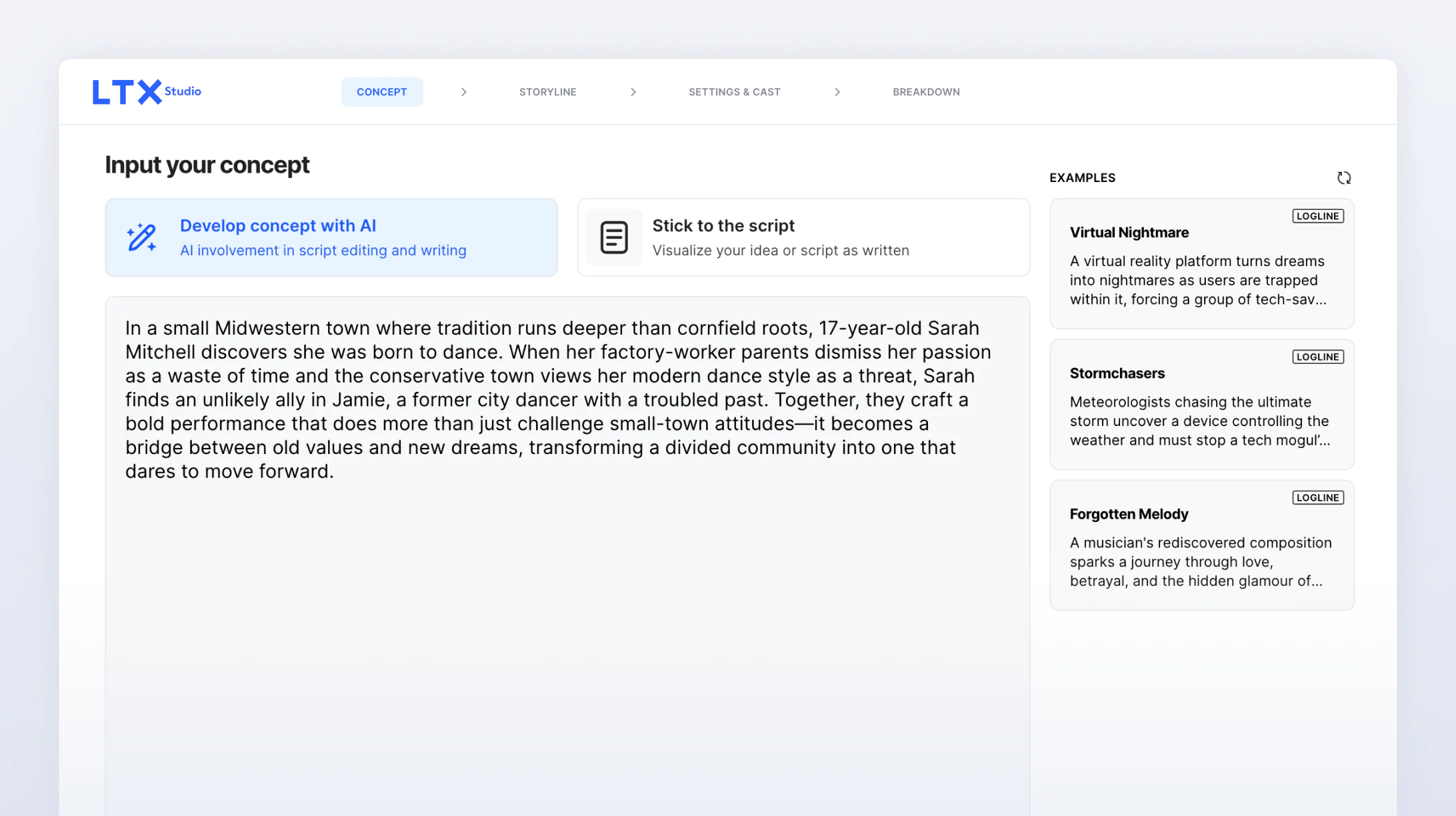
“In a 1990s Midwestern factory town, 17-year-old Sarah Mitchell sweeps floors at her father’s plant and dances in the empty break room after midnight. When the plant announces closure and Sarah’s college application is rejected, she signs up for a regional dance competition with a 25,000 dollar prize against her parents’ wishes.
Sarah finds a partner in Jamie, a former Chicago dance teacher with a closed studio and a drinking problem. They rehearse in the abandoned plant, choreographing a piece that fuses Sarah’s gospel-church training with Jamie’s modern technique. Sarah’s father, who blames dance for her mother’s death in a touring accident, finds them and bans Sarah from the audition. Jamie quits two weeks before the competition, terrified of failing publicly again.
Sarah drives to Chicago alone, performs a solo version of the piece, and falls during the final lift. She finishes the routine on the floor. She loses the competition but is offered a full scholarship by a judge who saw the recovery. She returns to the factory, performs the piece at the closing ceremony, and her father watches without leaving. The film ends with Sarah on a bus to Chicago, Jamie sober and watching from the platform.”
Notice the four beats are visible, every paragraph advances the protagonist’s goal, the ending is stated, and supporting characters appear only when they change Sarah’s choices.

Example Film Synopsis: Thriller (180 Words)
Thrillers compress the four beats and front-load the inciting incident. Same skeleton, different rhythm:
“Maya Chen, a 34-year-old wildfire dispatcher in Northern California, takes a 911 call from her own sister three hours before a controlled burn. The sister whispers an address and the line goes dead. The address is not on any registered fire perimeter.
Maya pulls dispatch records and finds the burn was authorized by her supervisor, signed off by a private timber company her father consulted for before his unsolved disappearance in 2019. She drives into the evacuation zone against orders, finds her sister chained inside a hunting cabin, and realizes the fire was set to destroy the cabin and everyone inside.
Maya breaks her sister free, calls a redirect to the fire crew, and confronts her supervisor on an open radio channel. The supervisor confesses on tape to keep the timber crew from advancing. The fire crew arrives. Maya and her sister survive. The film ends in a federal courtroom three months later, Maya testifying with the original 911 recording on the speaker.”
Writing a Movie Synopsis: Best Practices
Keep it tight
For a one-page short synopsis, target 250–300 words. If your synopsis runs over 300 words, you are probably including too much subplot detail. Aim for the upper end of any requested word range, never over.
Focus on your protagonist
Your main character should be your lens into the story. Supporting characters matter only in how they relate to your protagonist’s choices.
Use active language
Make every word count by choosing strong, active verbs. Instead of “the decision was made,” write “she decides,” “he fights,” or “they transform.” Your synopsis should move with the same energy as your film.
Reveal the ending
Unlike a logline or marketing copy, a synopsis reveals your complete story arc including the resolution. Producers and executives need to know how your story ends to evaluate whether it’s commercially viable.
Match your genre’s tone
A horror synopsis should create tension in its sentences. A comedy synopsis can be playful. A reader should know the genre by the second paragraph without you labelling it.
Common Synopsis Mistakes to Avoid
Mistakes in synopses cluster. The same five problems show up across drafts and account for most rejections.
1. Too many named characters. Three is the working ceiling for a one-page synopsis. Every name a reader has to track is cognitive load. Refer to supporting characters by role (“her supervisor,” “the timber crew foreman”) unless their name carries plot weight.
2. Vague stakes. “Things get complicated” tells a reader nothing. Name the obstacle, name what is lost if it wins. “She loses custody” beats “her family is at risk.”
3. Mixing tense. Synopses are present tense throughout. “She walks into the room.” Slipping to past tense breaks the reader out of the story.
4. Hiding the ending. The number one reason readers stop short of the last paragraph. State the resolution clearly.
5. No genre signal. A horror synopsis should feel tense in its sentences. A comedy synopsis can be playful. A reader should know the genre by the second paragraph without you labelling it.
Why a Synopsis Is Vital in Filmmaking
A powerful synopsis does more than tell your story — it opens doors. In an industry where time is precious and competition fierce, these few paragraphs can transform your script from one in a stack to the one that gets read.
Beyond pitching, synopses help during development. They keep creative teams aligned on the core story. They provide reference points when the script evolves through multiple drafts. They help maintain focus on what matters most when temptation arises to chase tangents.
Think of your synopsis as a calling card for your storytelling ability. A well-crafted synopsis signals professionalism and creative competence before anyone reads a single page of dialogue.
Writing Synopses with LTX Studio
LTX Studio is a complete creative suite for AI video production, and the synopsis is the first artifact most projects need. Three workflows cut synopsis time significantly.
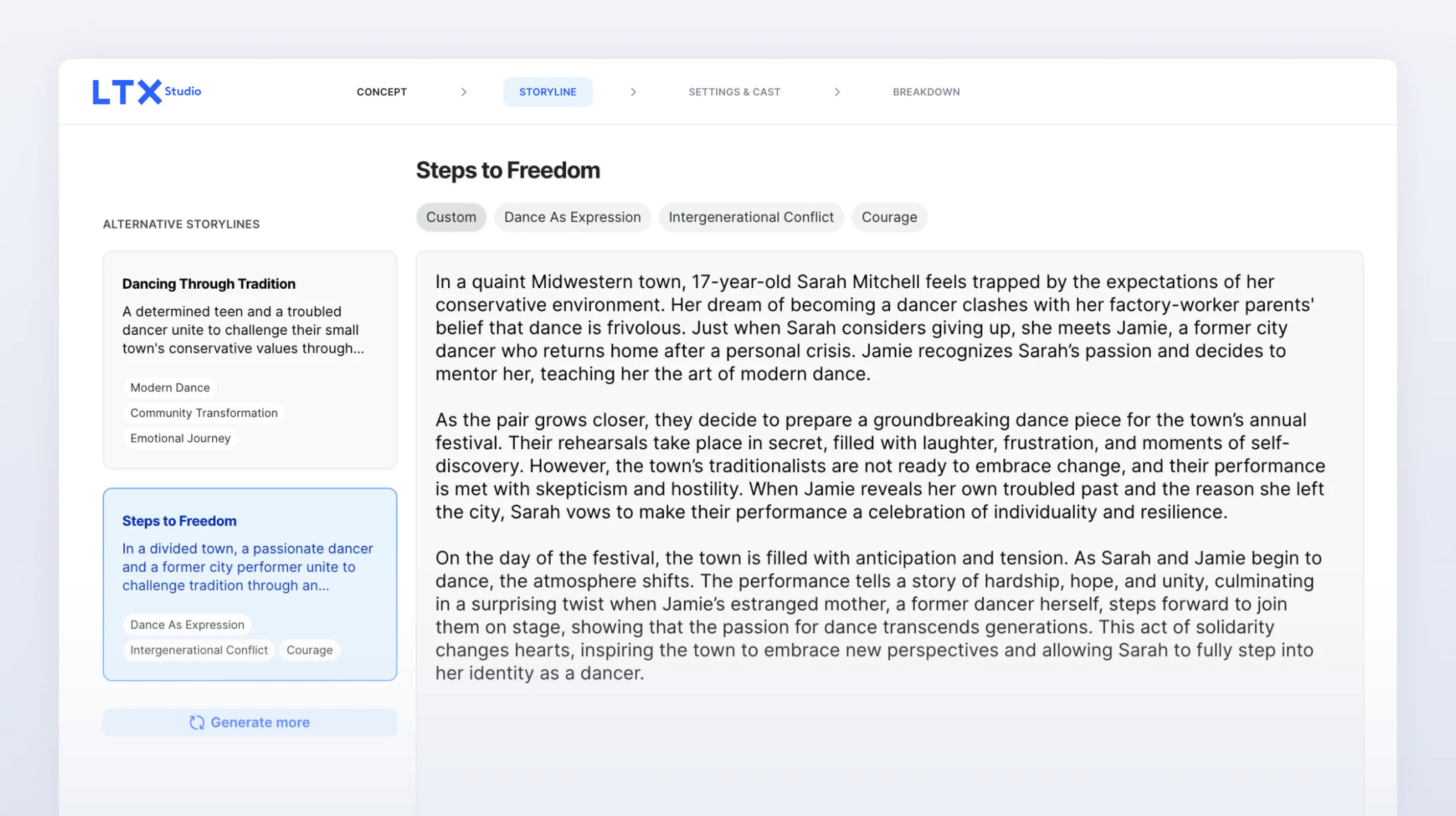
Generate a first-pass synopsis from a logline. The AI script generator takes a one-line premise and returns a structured outline including a synopsis draft. Treat it as a scaffold, not a final document, and revise against the four beats above.
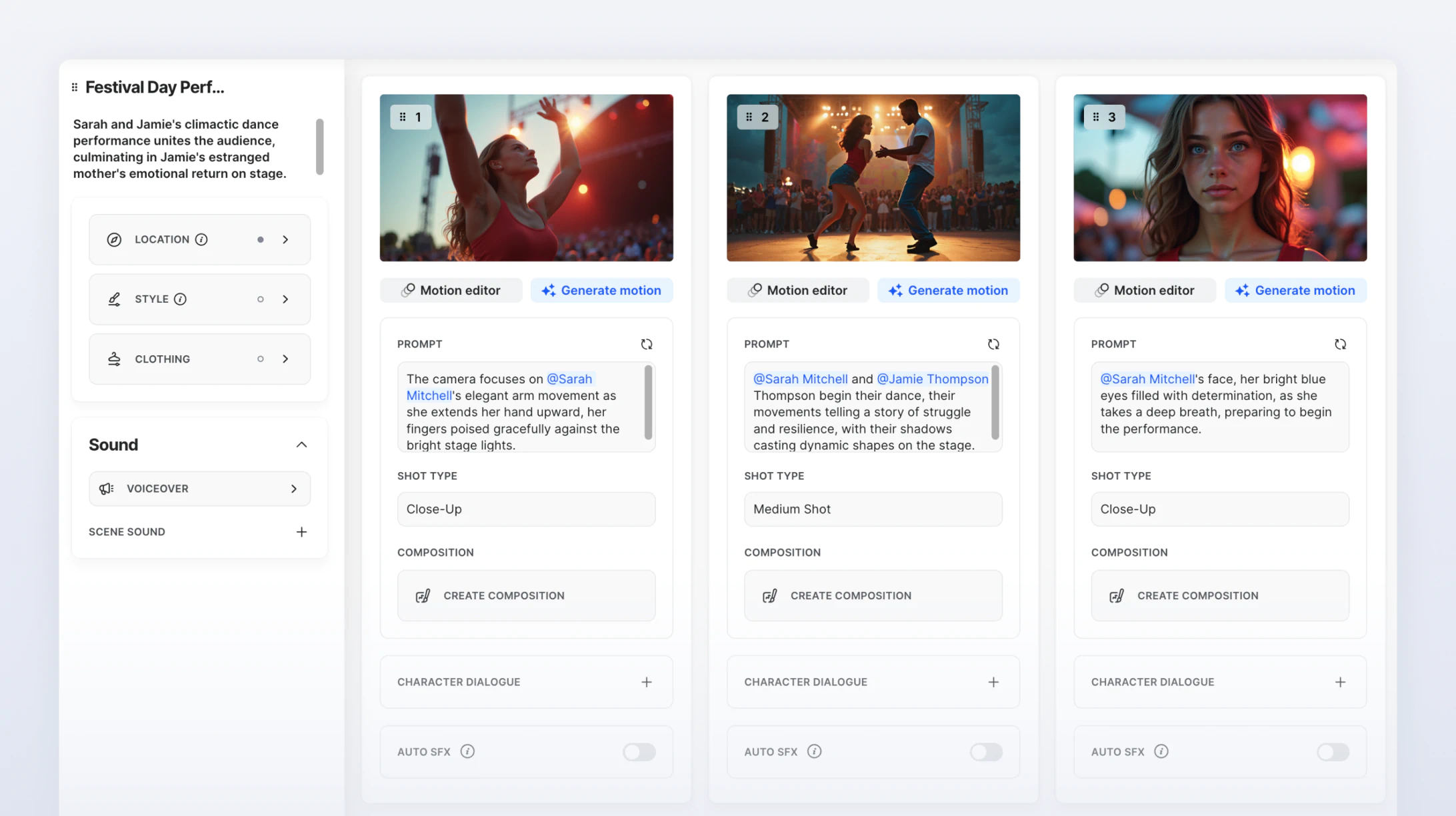
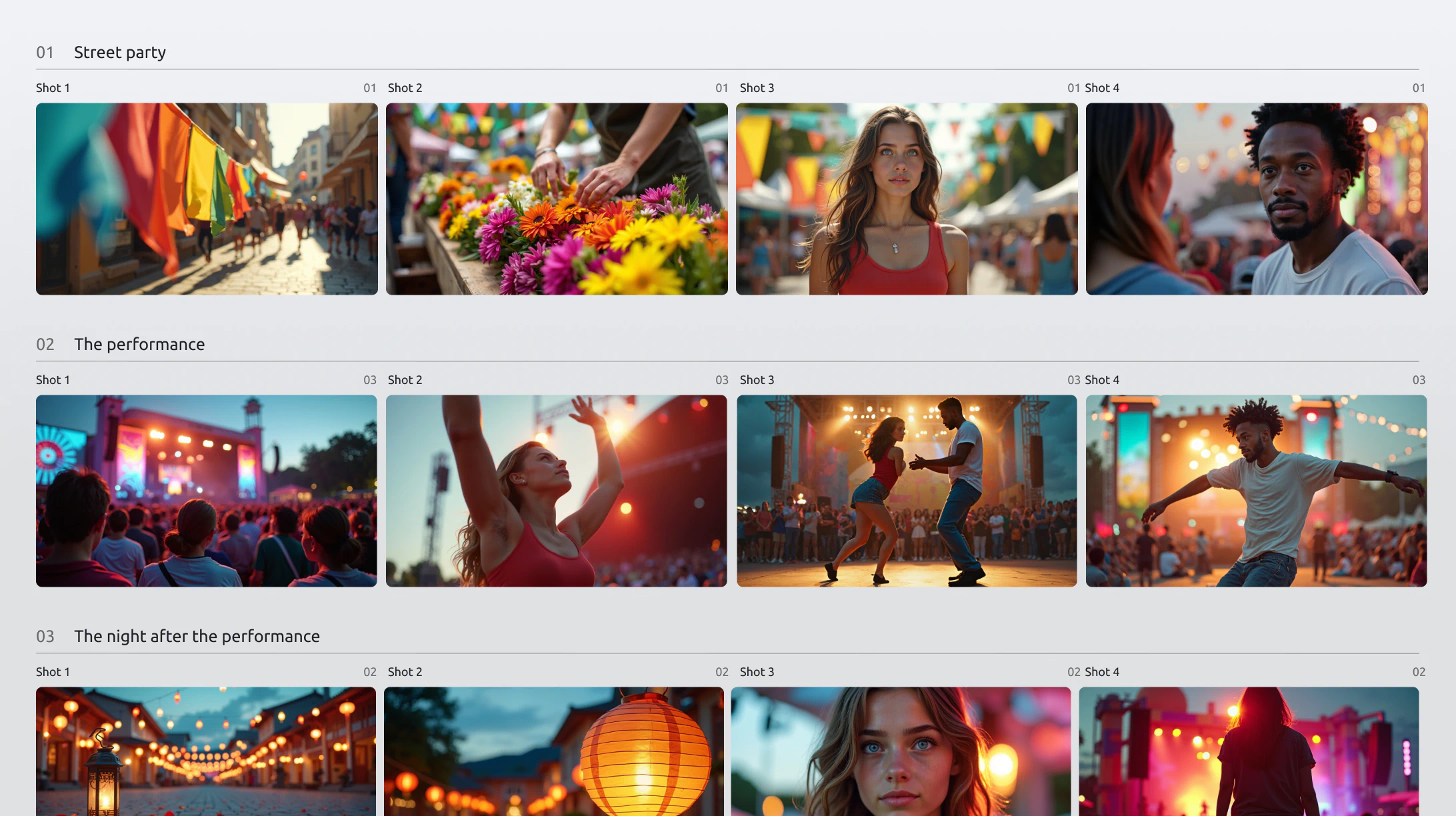
Pressure-test the synopsis visually before you commit. Drop the four beats into the AI storyboard generator and generate key frames for each. If the visuals do not clarify the story, the synopsis is not yet clear either. This catches structural problems while they are cheap to fix.
Ship the synopsis inside a pitch deck. The pitch deck generator exports the synopsis, scene-level breakdown, and storyboards as one designed document. One file goes to the producer, instead of three attachments.
Conclusion
A movie synopsis is a 150 to 500 word, present-tense prose summary that names the protagonist, the inciting incident, the escalation, and the ending. The four-beat structure (Setup, Inciting Incident, Escalation, Resolution) holds across genres, and the upper end of any requested word range is the right target.
The five most common rejection causes are too many named characters, vague stakes, tense mixing, hidden endings, and missing genre signal. Inside LTX Studio, the AI script generator, AI storyboard generator, and pitch deck generator turn the synopsis into a visual draft and a pitch-ready document in one workspace.
Ready to draft your next synopsis with a visual loop attached? Start a project in LTX Studio and open with a logline.
How To Write A Movie Synopsis FAQs
What is a movie synopsis and what should it include?
A movie synopsis is a short text that distills your story into its most compelling elements—introducing main characters, revealing the central conflict, and showing how the journey unfolds. It should include introduction (protagonist, goals, setting), conflict (main challenge or antagonist), and climax and resolution in just a few paragraphs.
How long should a film synopsis be?
A compelling synopsis should be one to two punchy paragraphs that leave readers wanting more. Keep it tight and focused on the protagonist's lens—through their eyes, readers should feel the weight of their choices and the pull of their desires without getting lost in subplot details.
What makes a great movie synopsis?
Use strong, active language that propels the story forward with words like "she decides," "he fights," or "they transform" instead of passive voice. Frame only what's essential to your core story, convey the emotional hooks that make your story unique, and demonstrate you know how to tell a story that matters in these critical opening paragraphs.