- LTX Studio goes beyond image generation as the best Midjourney alternative — connecting images directly to video production, storyboarding, and brand-consistent workflows in one platform
- For free options, Google ImageFX and Leonardo.ai both deliver strong quality at no cost.
Midjourney still produces some of the best AI stills on the market, but the bottleneck for most professional teams in 2026 is not the image. It is the next step. The strongest Midjourney alternative for creators who need that next step is LTX-2.3, the open-weights audio-video foundation model from Lightricks that turns image references into synchronized video in a single forward pass.
This guide compares LTX-2.3 and five other tools (Adobe Firefly, Leonardo.ai, Google ImageFX, ChatGPT Images, and Ideogram) on the things that actually decide a switch: motion support, openness, hardware footprint, text-in-image quality, and pricing.
What Is Midjourney?
Midjourney is an AI image and video generation tool available via a dedicated web app and through Discord. It produces high-quality, stylized imagery and has video generation on its higher-tier plans. There is no free trial — plans run from $10 per month up to $120 per month, with video generation requiring the Standard plan or above. All images are publicly visible by default; keeping work private requires the Pro plan at $60 per month.
Midjourney’s image quality is not the reason teams leave. The reasons are structural: no free trial, public gallery by default on lower tiers, video generation gated to higher plans, and no path from a generated still into a sequence, animatic, or finished video.

Side-by-Side Comparison
| Tool | Open weights | Native video | Min VRAM (local) | Free tier | Best at |
|---|---|---|---|---|---|
| LTX-2.3 | Yes (HuggingFace) | Yes, synchronized audio + video | 32GB FP8 / 80GB+ full | Hosted playground | Image-to-video with audio, local or cloud |
| Adobe Firefly | No | Yes (cloud-only) | Cloud-only | Limited monthly credits | Adobe CC integration, licensed training data |
| Leonardo.ai | No | Limited (cloud) | Cloud-only | ~150 tokens/day | Multi-model image studio with Canvas Editor |
| Google ImageFX | No | No | Cloud-only | Generous daily limits at 2K | Free photoreal stills with SynthID watermark |
| ChatGPT Images | No | No | Cloud-only | Free via ChatGPT Free tier | Conversational iteration, text inside images |
| Ideogram | No | No | Cloud-only | ~25 images/day | Accurate readable text in images |
Three things stand out. LTX-2.3 is the only tool here you can download and run on your own GPU. It is the only one whose audio and video stream are generated in the same forward pass. And, when paired with the image models inside LTX Studio, it is the only path that goes end-to-end from prompt to finished sequence inside one project.
Best Midjourney Alternatives in 2026
#1 LTX Studio with LTX-2.3
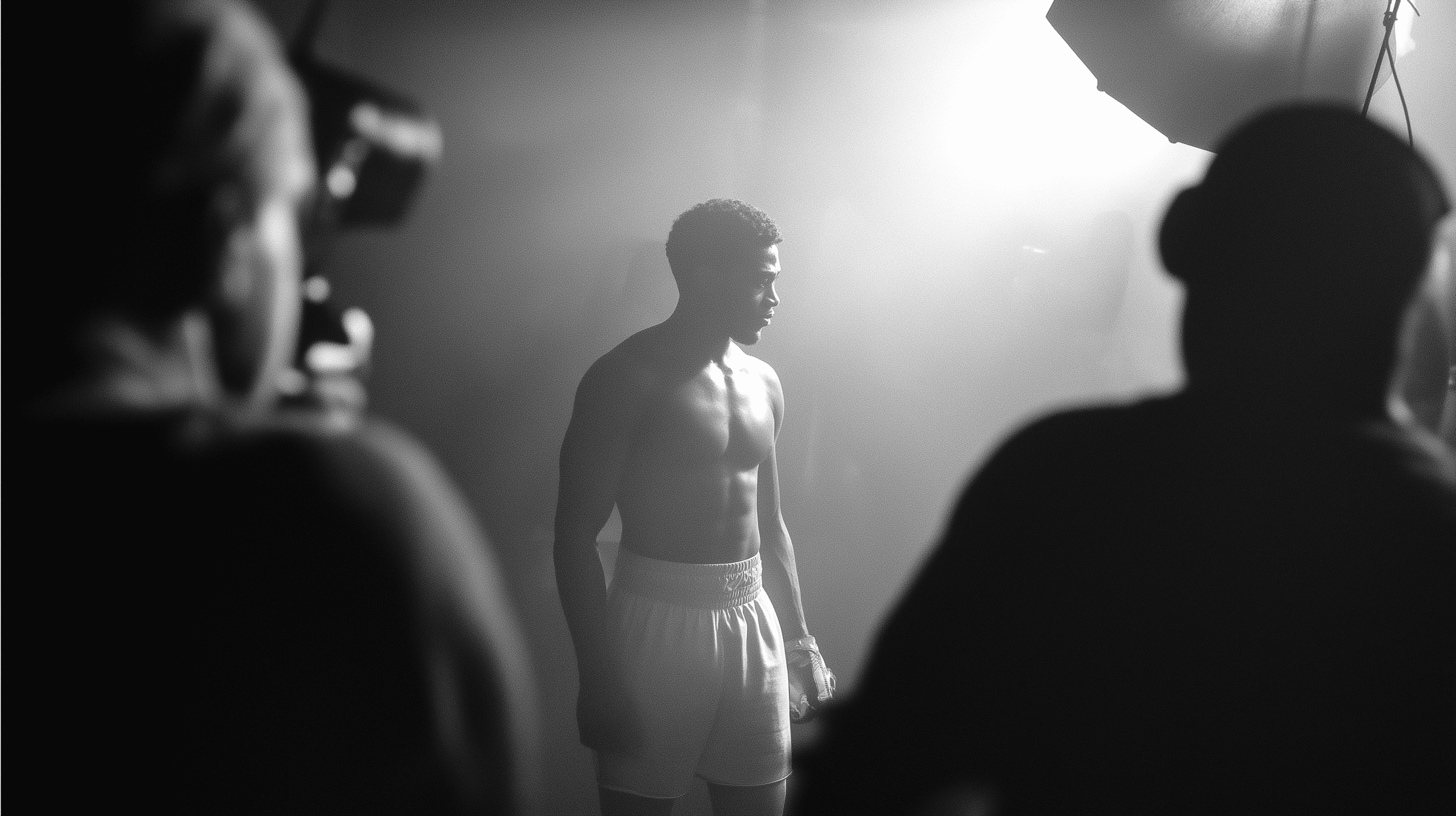
LTX-2.3 does not replace Midjourney as a pure image generator. It replaces Midjourney for the much larger group of creators who started with Midjourney to get a hero still and then needed motion. LTX-2.3 is a 22-billion-parameter asymmetric dual-stream diffusion transformer (14B video stream, 5B audio stream, 48 shared transformer blocks with cross-modal attention). The checkpoints, ltx-2.3-22b-dev and ltx-2.3-22b-distilled, ship publicly on HuggingFace. The model accepts image references and produces synchronized 24kHz stereo audio with the video in one pass, decoded through a separate audio VAE and HiFi-GAN vocoder.
LTX-2.3 exposes eight documented pipelines:
TI2VidTwoStagesPipelineandTI2VidTwoStagesHQPipelinefor production-quality text and image-to-videoTI2VidOneStagePipelinefor fast prototypingDistilledPipelinefor the lowest step countICLoraPipelinefor video-to-video transformationsKeyframeInterpolationPipelinefor keyframe-driven motionA2VidPipelineTwoStagefor audio-driven videoRetakePipelinefor regenerating specific time regions of an existing clip
Midjourney exposes one image surface and one video toggle. LTX-2.3 exposes eight surfaces a production team actually needs.
LTX Studio is the production environment where LTX-2.3 lives alongside other models. The platform integrates image generation (FLUX.2 Pro, Nano Banana Pro, Z-Image), video production, storyboarding, animatics, and team collaboration in a single workspace. Brand Kits store characters, logos, fonts, and visual styles as reusable elements that carry across any project. Consistent AI characters carry through from image generation into video, maintaining the same face, style, and visual identity across every scene.
Best for: Creative teams, agencies, brand studios, and enterprise teams that need image generation as part of a full production workflow — not just a standalone output.
#2 Adobe Firefly
Adobe Firefly is the right pick if your team already lives inside Photoshop, Illustrator, and Premiere Pro. Firefly is trained exclusively on licensed content, which removes the IP question that comes up in enterprise procurement. It generates images, vectors, and video from prompts, and the Premiere Pro integration extends to text-driven edits inside an existing timeline. Everything stays inside the Adobe stack at Adobe pricing; you trade portability for integration.
Pick Firefly when Creative Cloud licenses are already paid for and the work needs to land in Adobe formats. Pick LTX-2.3 when the work needs to run on a workstation GPU, the IP question is answered by training data your team controls, or the output needs audio baked in.
Best for: Teams with existing Adobe Creative Cloud workflows and IP compliance requirements.
#3 Leonardo.ai
Leonardo.ai offers a strong free tier (~150 tokens per day) and supports multiple AI models including FLUX, making it one of the most accessible options for individual creators and small teams. Its Canvas Editor gives direct control over composition. Video is a cloud-only add-on rather than a primary capability. Leonardo competes with Midjourney on per-image quality at a lower entry price.
Best for: Individual creators and small teams looking for a capable, affordable option with multi-model access.
#4 Google ImageFX
Google ImageFX runs on Imagen 4 and Imagen 4 Ultra, producing photorealistic output at up to 2K resolution with generous daily limits at no cost. SynthID watermarking is applied to every output, which matters for distribution platforms that require provenance markers. ImageFX is a pure image endpoint, not a workflow tool. Use it for high-volume photoreal stills when budget is the constraint.
Best for: Anyone needing fast, high-resolution photorealistic stills for free.
#5 ChatGPT Images
ChatGPT Images runs on GPT-4o and lives inside the conversational workflow most teams already use. Its strengths are text rendering inside images and scenes with many distinct objects. You iterate by describing changes in plain language rather than rewriting prompts from scratch. Available across ChatGPT paid tiers and the free tier with stricter limits.
Best for: Teams who want image generation inside their existing ChatGPT workflow; visuals with readable text; iterative generation through conversation.
#6 Ideogram
Ideogram solves the one problem most AI image generators still handle poorly: legible text inside the frame. If the deliverable is a poster, a social ad with a tagline, or a sign that needs to read correctly, Ideogram outputs the most reliable text rendering of any tool on this list. Free tier covers around 25 images per day. Pair Ideogram for static copy-heavy creative with LTX-2.3 for the motion sequences that surround it.
Best for: Designers and marketers who need accurate, readable text rendered inside generated images.

Picking the Right Tool by Job
Job-to-tool mapping is more useful than a single ranking:
- Cinematic image-to-video with synchronized audio: LTX-2.3
- Adobe-native production assets with licensed training data: Adobe Firefly
- Multi-model image experimentation on a budget: Leonardo.ai
- Free high-resolution photoreal stills: Google ImageFX
- Iterative concept work inside an existing chat surface: ChatGPT Images
- Posters, logos, or any creative with on-image text: Ideogram
Most working pipelines use two or three of these together: Ideogram or ChatGPT Images for a hero frame, LTX-2.3 for the surrounding motion.
Conclusion
Midjourney remains a strong standalone image tool. It is no longer the only serious option, and for any team moving from stills into motion, an open-weights audio-video model like LTX-2.3 is the alternative worth evaluating first.
LTX-2.3 is the strongest Midjourney alternative for creators who need motion, synchronized audio, or open-weights inference. Adobe Firefly suits Creative Cloud teams that need licensed training data. Leonardo.ai and Google ImageFX cover budget-constrained image work. ChatGPT Images and Ideogram cover conversational and text-heavy creative respectively. The decision turns on whether the image is the deliverable or the first frame of a sequence.
Try LTX-2.3 through LTX Studio, or explore the open-weights checkpoints on HuggingFace.